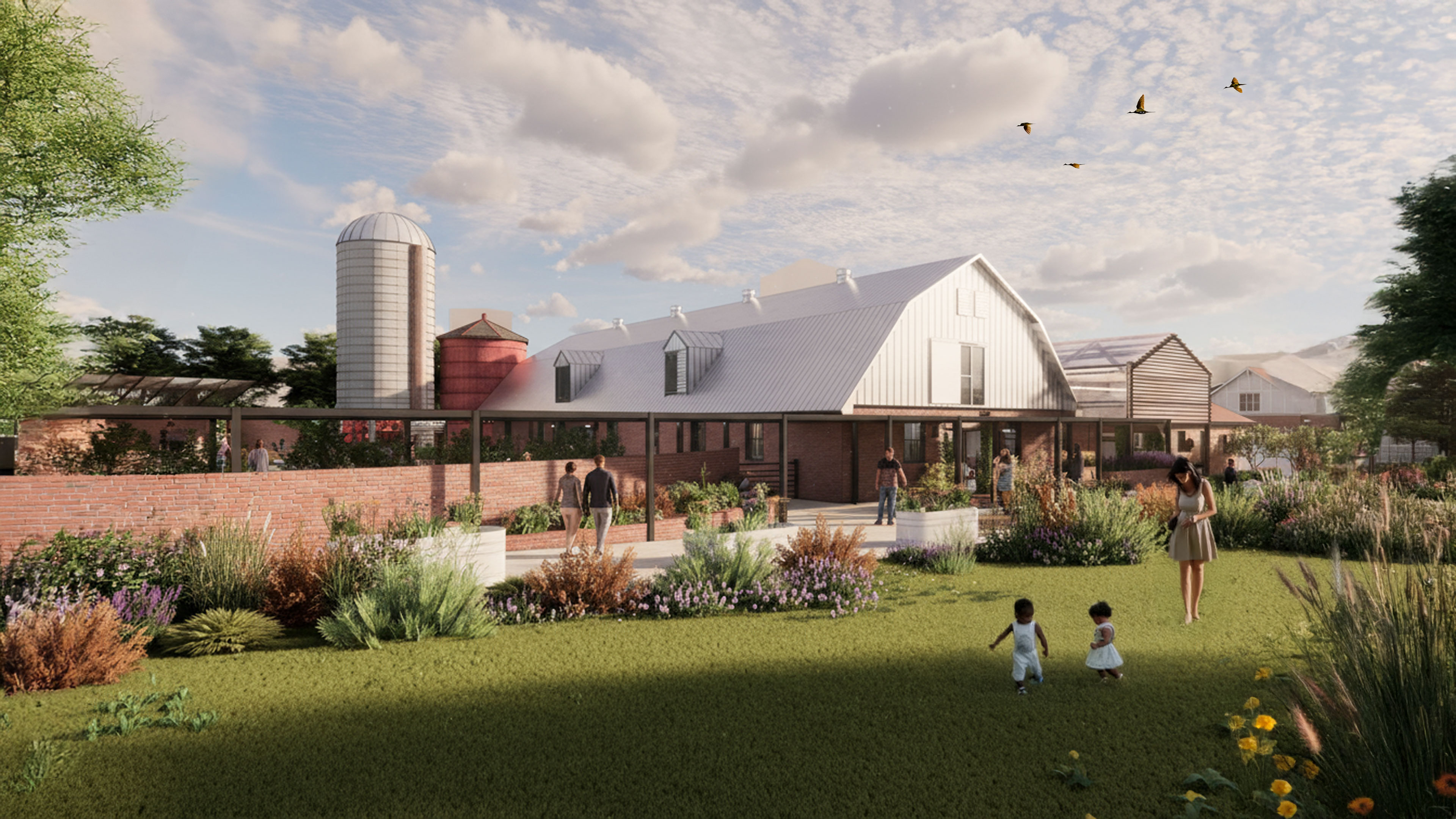
Some places carry more than memory. They carry meaning. Shoenberg Farms is one of them. Completed in 1912 and funded by philanthropist Louis Dudley Shoenberg, the original farm was built in memory of his son, who perished from tuberculosis, to provide fresh milk, cream, eggs, and poultry for the Jewish Consumptives Relief Society (JCRS), an organization that housed and treated tuberculosis patients drawn to Colorado for its clean air and altitude. Acquired by J.J. Tepper in 1921, the farm expanded dramatically, with Tepper credited as one of the first poultry farmers to experiment with artificial lighting to extend daylight hours and increase egg production. At its peak, the farm produced over 1,200 dozen eggs per day, making it one of the largest dairy and poultry operations west of the Mississippi. By 1959, it had merged with Dolly Madison Ice Cream Stores, becoming their primary dairy supplier. Throughout it all, Shoenberg Farms was never just a place of production. It hosted picnics, dances, and educational programs, serving as a hub of community life for over a century.
With more than 113 years of continuous presence, this is not a site to be preserved behind glass. It is one to be reborn.
The design is grounded in three overlapping principles: Integrity, Activation, and Connection. Integrity commits to honoring the original structures, the barn, pump house, and adjacent residences, not as relics but as living artifacts. Additions are clearly modern but measured, crafted to coexist with the original architecture without mimicry. Activation transforms static architecture into a living, breathing environment. The historic barn's bones remain, but their purpose is reinvigorated through vendor stalls, communal seating, and layered dining experiences. The interstitial space between the barn and pump house, once a void, becomes a vibrant central hub designed for eating, gathering, and celebrating. Connection binds it all together: between structures, between old and new materials, between past and present, and between the people who gather here. Thoughtful thresholds, sight lines, and material transitions subtly guide visitors from one environment to the next, creating a sense of continuous discovery.
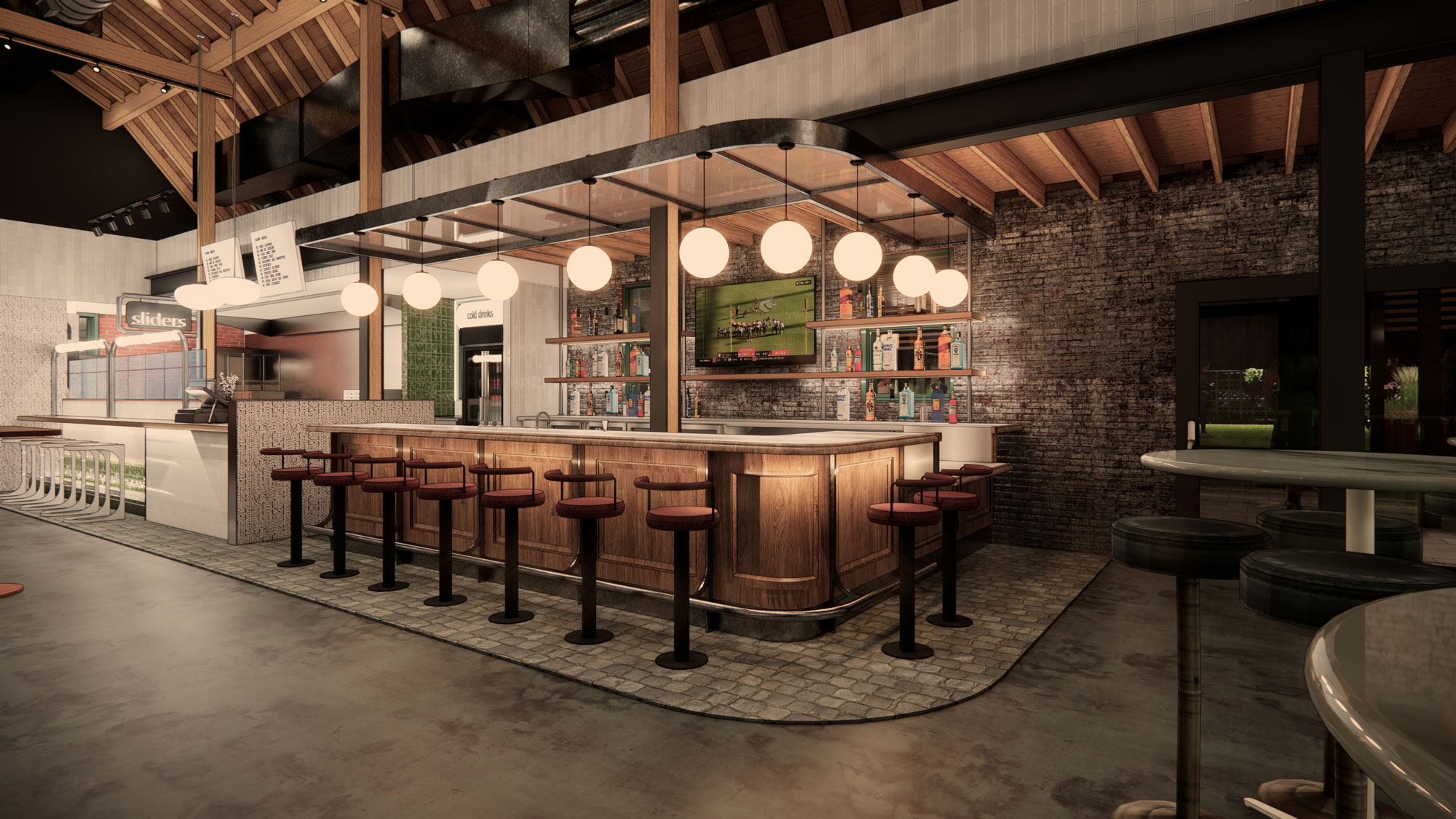
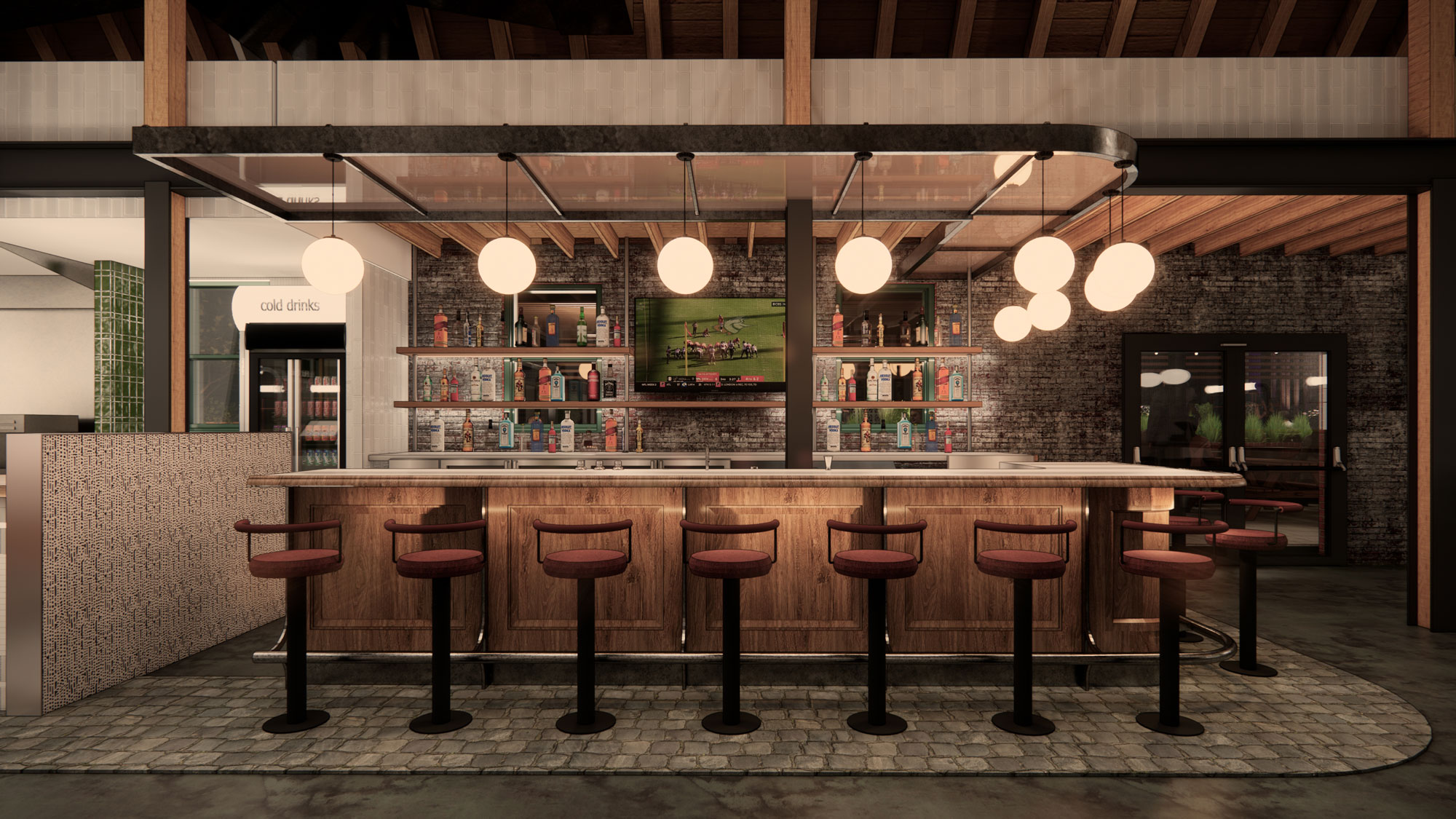
Those material choices tell their own story. The farm's original structures were built with purpose over pretense, weathered timber, poured concrete, exposed rafters, and galvanized steel. The design preserves, highlights, and extends these honest materials, allowing them to speak clearly while new contemporary insertions, smooth white plaster, brushed stainless steel, and clean tile, offer a deliberate contrast that is not antagonistic but reverential. The juxtaposition sharpens the presence of the original structure, framing its texture, age, and craft in a quieter light. Subtle curves throughout the interior draw inspiration from the gentle form of a vintage milk bottle and the organic geometry of an egg, each one designed to be felt rather than announced.
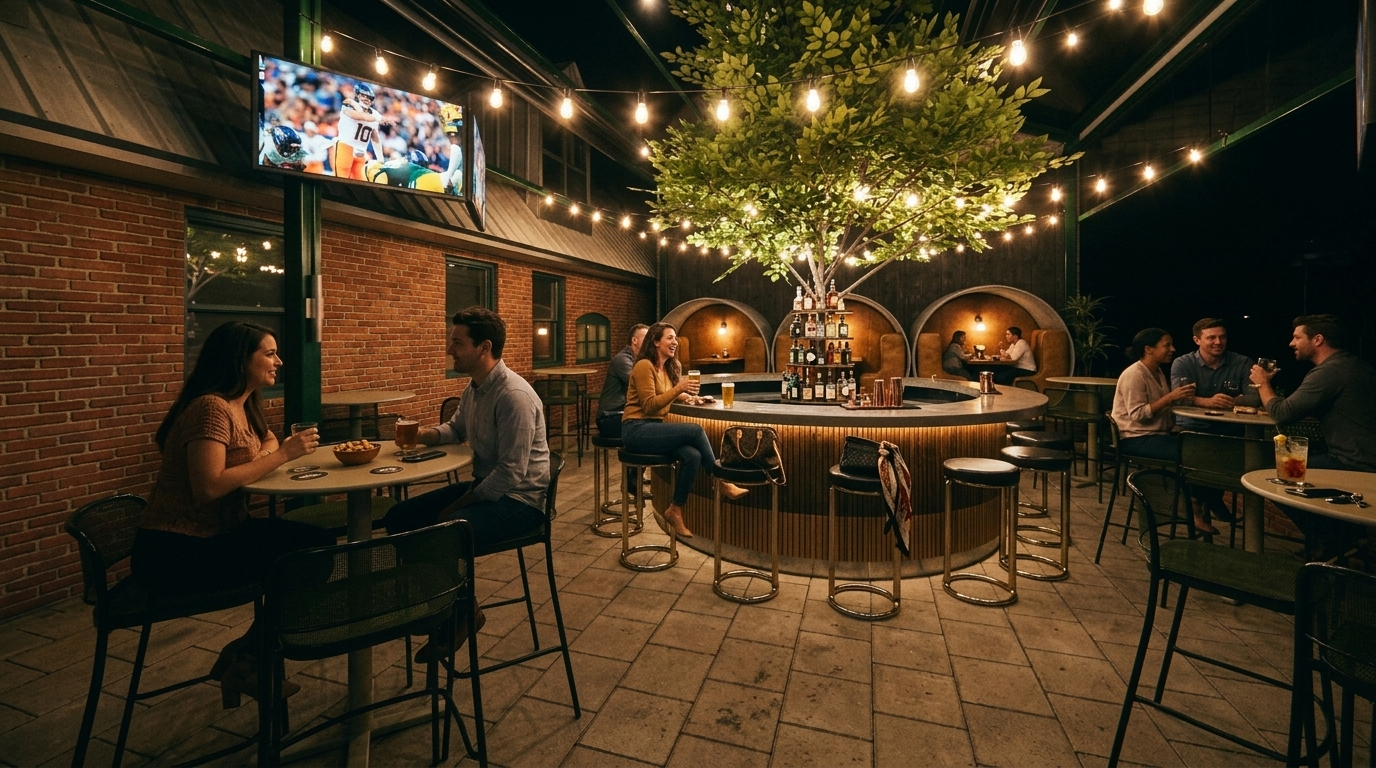
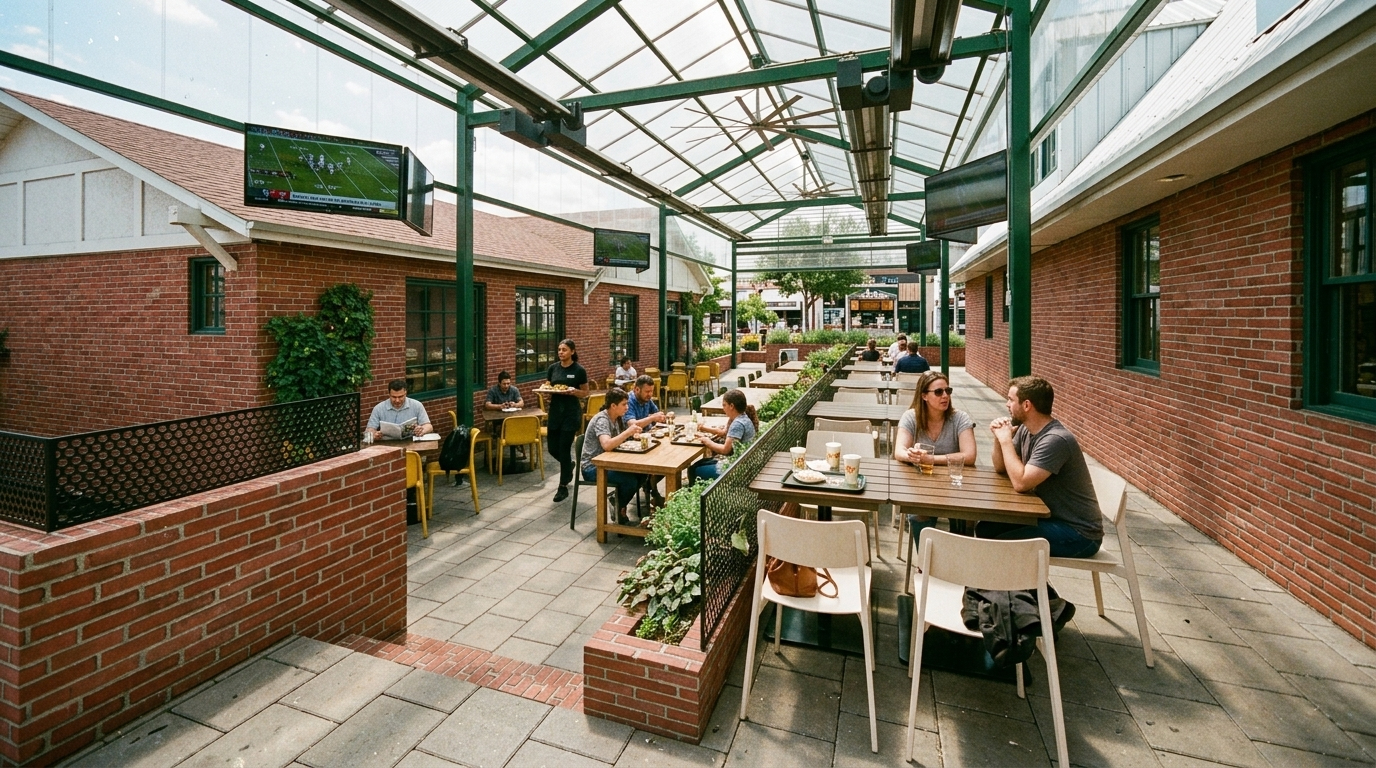
The food vendors at The Berg are not incidental to this vision. They are central to it. In the same spirit that the farm once fed a community in need, the food hall is designed to showcase local food, traditions, and talent, turning each vendor stall into a place of ongoing cultural exchange. The shared dining hall, the mezzanine above, the silo bar, the outdoor patio, and the performance stage are all connected in a deliberate sequence, a spatial journey that moves from intimate to expansive, from indoors to open sky, from a quiet meal to a live performance under the stars. Every element of the design, from lighting and acoustics to spatial adjacencies, is carefully considered to ensure the space feels alive, welcoming, and genuinely communal.
This is The Berg. A third space, outside of work and home, where people gather not out of obligation but out of desire. Where legacy and innovation coexist. Where history is honored through use.